
A musty smell under the house
Persistent odors can be a reason to inspect the crawl space for excess moisture, rather than simply covering the smell inside the home.
Crawl space encapsulation is a sealed moisture-control system that covers exposed soil and may extend along foundation walls and around support piers, with a strategy for managing humidity. If you have musty odors, damp insulation or excess crawl space moisture in Indian Trail, Monroe or nearby Union County communities, Revamp can assess whether your home needs a full encapsulation system, vapor barrier replacement or another targeted solution.
See 7 photos of completed local workCrawl space moisture issues often become noticeable long before homeowners see what's happening below the floor.
Persistent odors can be a reason to inspect the crawl space for excess moisture, rather than simply covering the smell inside the home.
Exposed soil and humid air may contribute to moisture around ducts, floor framing and insulation.
Not every floor problem is moisture-related. An assessment helps separate crawl space moisture concerns from issues needing another trade.
Explore how the ground liner, foundation edges and moisture sources fit together. Select a numbered point to learn the difference between a basic vapor barrier and a complete sealed crawl-space approach. This is an educational illustration, not a building plan.
Tap numbered points, or choose an explanation on the right. Educational illustration only.
Soil can release water vapor into a crawl space. A well-selected ground vapor barrier helps reduce that migration, but it does not repair active leaks or flooding.
A complete crawl-space encapsulation system goes beyond laying plastic on the ground. Depending on the home, it can include a durable sealed ground liner, foundation-wall and pier detailing, air sealing, insulation considerations and a strategy for maintaining appropriate humidity. Addressing active water entry is a separate first priority.
Some homes only need a damaged ground barrier repaired. Others benefit from a full crawl-space encapsulation system. An assessment helps distinguish these needs and identifies moisture sources that require attention first.
If the existing plastic is torn, loose or missing in places, check the seams, edges and ground coverage. Some crawl spaces need localized repairs; others benefit from a new vapor barrier.
Full crawl-space encapsulation may combine sealed ground and wall liners, appropriate foundation and pier detailing, controlled air leakage and a humidity-management approach. The design should reflect the home's conditions.
Water pooling after rain, plumbing leaks and flooding need to be evaluated separately. Installing a crawl space moisture barrier over active water intrusion does not fix the water source.
Not sure what your crawl space needs? Describe what you are noticing. Revamp can assess whether a repair, new vapor barrier or complete encapsulation approach fits your home.
Request a Crawl Space Inspection →Check ground moisture, water entry, humidity, access and the condition of existing liners, walls and piers.
Explain whether a liner repair, replacement or full sealed crawl-space system is appropriate.
Complete the agreed liner, sealing and applicable moisture-control details of the selected system.
Review the completed installation, maintenance considerations and any conditions that need follow-up.
Your written proposal should identify the materials, preparation and moisture-control method selected for your home. Ground coverage alone and a complete encapsulation system are different scopes.
Confirm the liner material, thickness and reinforcement, the areas receiving coverage, seam tape, wall attachment and the treatment around piers and penetrations. Product choices are confirmed in the project scope.
Where included, identify the dehumidifier or other selected humidity-control method, drainage route, access for maintenance and any electrical or trade work needed.
State what happens to old ground cover, debris and affected insulation. List drainage, plumbing, remediation or structural repairs separately when they are needed before enclosure.
We assess the moisture source, explain the selected scope, complete the agreed work and walk through the installation and maintenance needs with you.
A homeowner in Indian Trail contacted Revamp about crawl-space moisture and subfloor concerns. These completed-work photographs show the crawl-space liner, detailing around the supports and humidity-control equipment.
The visible work is documented below. Subfloor condition and repair needs are assessed separately from the moisture-control system so the written scope addresses both concerns.
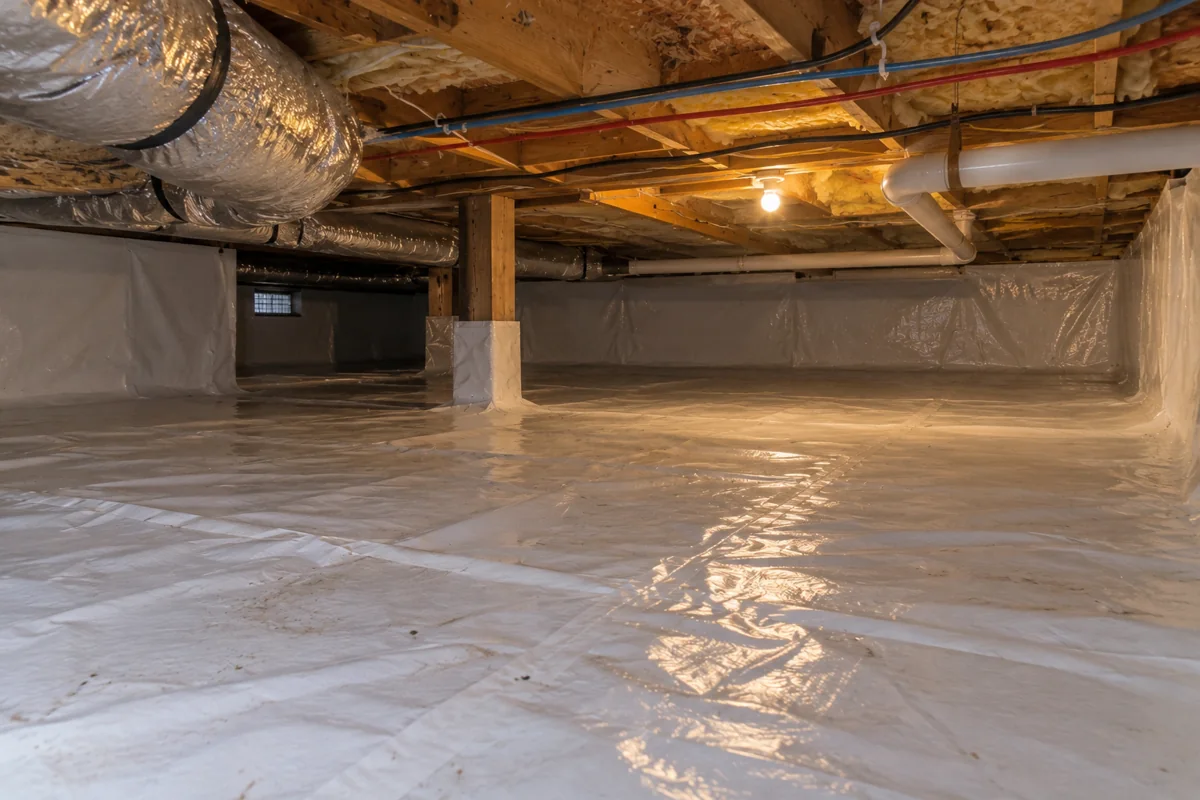
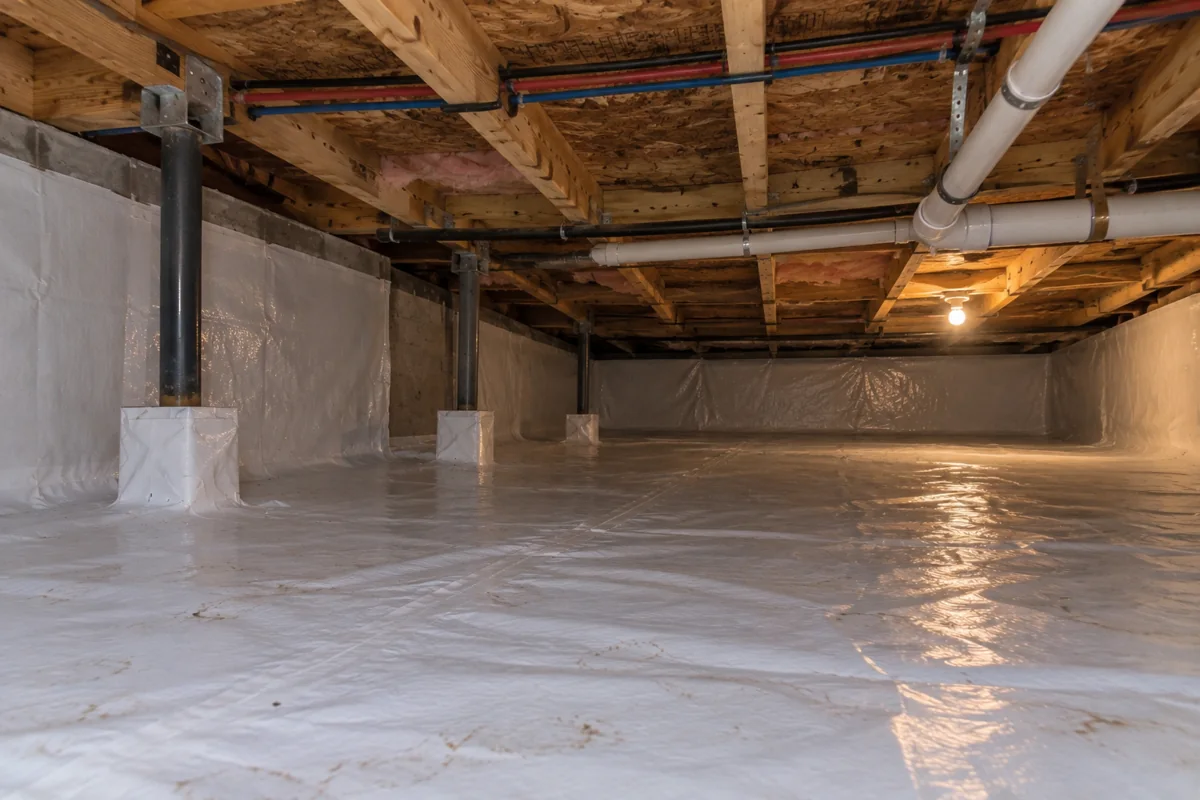
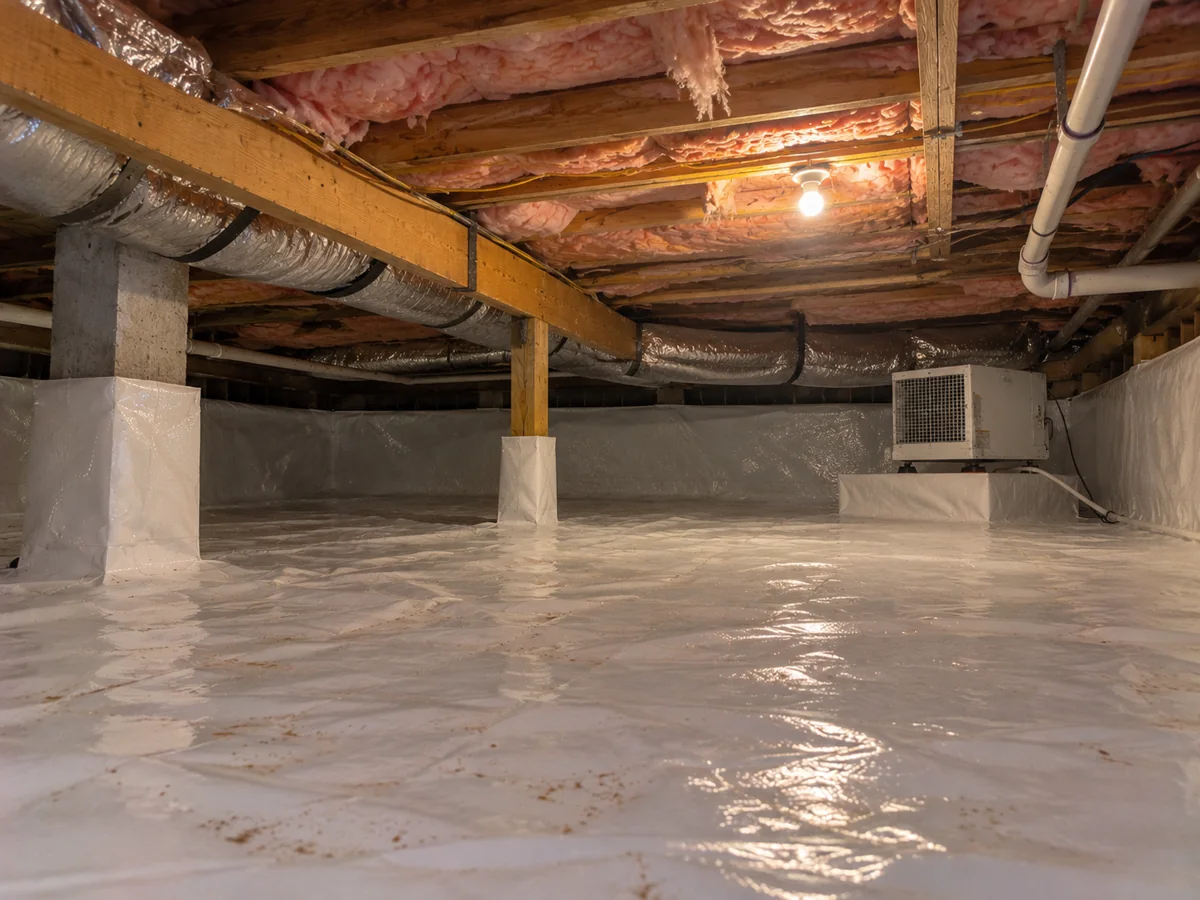
These photos show completed Revamp crawl space encapsulation work in Monroe, NC, including ground liners, taped seams, masonry pier detailing and wall coverage. Revamp has also completed work in Hidden Meadows and the Monroe Historic District.
Crawl space vapor barrier installation detail with taped seams and a continuous liner fitted around masonry supports.
Completed crawl space encapsulation showing the white moisture barrier, continuous coverage around support piers and ductwork above.
Crawl space moisture barrier detailing near the irregular foundation wall and insulated ductwork, including overlapped liner sections and taped joints.
A completed Monroe crawl space with sealed white ground covering, taped seams and neatly detailed support-pier bases.
An installed ground liner with visible taped seams, masonry support-pier detailing and plumbing passing through the space.
A finished Monroe crawl space showing the vapor barrier meeting block supports and a brick foundation wall.
Installed white liner extends across the crawl-space floor and foundation walls beneath the home’s framing.
Seven completed-work photographs from Revamp projects in Monroe, NC, including work in Hidden Meadows and the Monroe Historic District. No before photos are represented as after comparisons.
Revamp has completed crawl space encapsulation work in Hidden Meadows and the Monroe Historic District in Monroe, NC. These genuine installation photographs show ground liners, taped seams, foundation-wall coverage and pier detailing. Photos from additional Monroe projects have been included without assigning unverified neighborhood names to individual views.
Revamp focuses on clear explanations and accountable service. A crawl space that smells musty or shows damp insulation deserves a plan based on its actual conditions, not a blanket promise that every moisture issue needs the same system.
The right solution depends on where moisture is coming from, how the space is built and whether other issues need attention.
If your home inspector reported dampness, damaged insulation or a missing vapor barrier, Revamp can assess the crawl-space condition and discuss practical next steps. For buyers, sellers, agents and investors submitting a formal report with multiple repair items, use our dedicated inspection-report estimate page.
Revamp is based in Indian Trail, NC. Find your North Carolina or South Carolina community below to ask about crawl space encapsulation, vapor barriers and moisture-control projects. Contact our team to confirm availability for the location and job.
Indian Trail-based service and nearby North Carolina communities.
Selected South Carolina locations. Scheduling depends on the project.
Select your town or community to find local service information. Revamp reviews requests across the region, with availability depending on the property and project.
Revamp has completed encapsulation work in Hidden Meadows and the Monroe Historic District. Actual installation photos appear above.
Full crawl space encapsulation is a moisture-control approach that generally uses a continuous ground vapor barrier with sealed seams and appropriate wall, pier and penetration detailing. A complete closed-crawl-space system may also address air leakage, insulation and humidity control. The exact design depends on the property.
A ground vapor barrier helps limit moisture migrating upward from exposed soil. Whether yours needs repair, replacement or a broader solution depends on its coverage, condition and other sources of water or humidity.
A basic vapor barrier mainly covers exposed soil. A full encapsulation system takes a more complete approach to sealing the crawl space, including appropriate foundation-wall and pier details and an overall air and humidity-control strategy.
Cost depends on the size and accessibility of the crawl space, preparation, existing water problems, material choice and whether the home needs a basic ground covering or a full system. An on-site assessment is the reliable way to define scope and price.
No. A vapor barrier is not a substitute for fixing leaks or bulk-water entry. Water that collects after rain, plumbing leaks or groundwater intrusion should be investigated before the crawl space is enclosed.
It can help when moisture entering through soil or unwanted outside air is part of the problem. Musty odors and high humidity can have other causes, so an assessment should check for leaks, condensation, ventilation conditions and affected materials as well.
Not every crawl space uses the same humidity-control method. The proper approach depends on its configuration, moisture sources and conditions found during the assessment. A ground liner alone does not automatically resolve every humidity issue.
The appropriate liner depends on durability needs, site conditions and the intended installation. Quality installation matters too, including adequate coverage and well-sealed seams, edges and penetrations. Revamp can discuss the proposed material specifications with the estimate.
Reducing excess moisture may make conditions less favorable for microbial growth, but encapsulation does not guarantee a mold-free crawl space or remove existing contamination. Suspected growth or damaged materials should be evaluated appropriately.
Timing depends on crawl-space size, access, site preparation, existing moisture issues and the full agreed scope. Revamp can discuss the likely schedule after assessing the property.
Request a crawl-space assessment if the main concern is moisture under the house. Buyers, sellers and real-estate professionals with a multi-item report can use our inspection-report repair estimate page to submit the relevant findings for review.
Contact Revamp about crawl space encapsulation, vapor barrier replacement or a moisture concern identified by a home inspection in Indian Trail or nearby Union County communities. Share the property address and what you have noticed so the team can discuss the next step.
Based in Indian Trail and serving Union County, including Monroe, Waxhaw and nearby communities. Contact us to confirm availability for your property.